
Weather protection that rolls away
Outdoor roller screens held in side channels, so they stay flat in wind and keep driven rain off balconies, terraces and seating areas.

Held on three sides, not left to flap
A zip screen is an outdoor roller blind whose fabric carries a welded bead along both vertical edges. That bead runs inside a side channel fixed to the wall, column or railing, so the fabric is held on three sides instead of hanging free. It does not billow in wind, and water running down the face is guided into the channel rather than blowing in around the edges.
WhiteShed Solutions LLP designs, fabricates and installs zip screens for balconies, terraces, restaurant and café seating, poolside areas and office breakout spaces. Every screen is specified for the opening it has to close:
- Waterproof, translucent or sunscreen-mesh fabric, chosen for what the space has to do
- Aluminium side channels and headbox, detailed for your wall, column or railing
- Manual or motorised operation, depending on width and use
- Site measurement before fabrication, and installation by our own team
Comparing options? Read our guide to balcony rain protection.
Book a free consultation
Share drawings, site photographs and the approximate area. Our team checks feasibility and sends a project-specific estimate.
Who it is for
Flat owners and housing societies
Balconies that become unusable from June to September, or take hard afternoon sun on a west face.
Interior designers
Indoor-outdoor transitions where the screen disappears when up and matches the design when down.
Restaurants, cafés and banquets
Outdoor covers kept through the monsoon, without a permanent enclosure.
Hotels and resorts
Poolside and terrace seating where guest comfort and the look of the property matter equally.
Offices, showrooms and clinics
Large glazed faces where glare and heat gain are the problem.
Builders and contractors
Balconies and terraces that need a weather answer before possession.
Built examples
Where has WhiteShed installed zip screens?
WhiteShed installed zip screen blinds at Taj Kovalam Resort in Kovalam, Kerala, where dining and verandah areas need protection from wind-driven monsoon rain without losing the view. See our work in Kerala.
From concept to completion
01
Site measurement
We measure the opening and check what the channels will fix into.
02
Fabric and operation
You choose the fabric and manual or motorised operation, with samples on site.
03
Fabrication
Screens are made to the measured sizes.
04
Installation
Our team fixes the channels and headbox and sets the screen.
05
Handover
We show you how to use and care for the screen.
How the system is put together
An aluminium enclosure at the top that houses the roller tube and keeps the fabric out of sun and dust when the screen is up.
The screen fabric with a continuous bead welded along both vertical edges, so it can be held in the channel under tension.
Aluminium extrusions fixed either side of the opening. They retain the bead, resist wind load, and carry water down and away.
A weighted bar that keeps the fabric taut and seals against the floor or sill when the screen is fully down.
A spring or crank mechanism for manual screens, or a tubular motor with a wall switch or remote for motorised ones. The fixing is decided on site, which is why we measure before we fabricate.
Zip screens installed
-
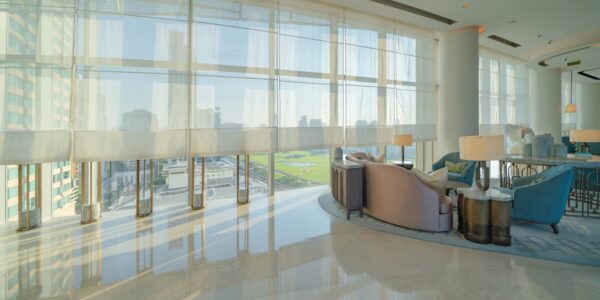
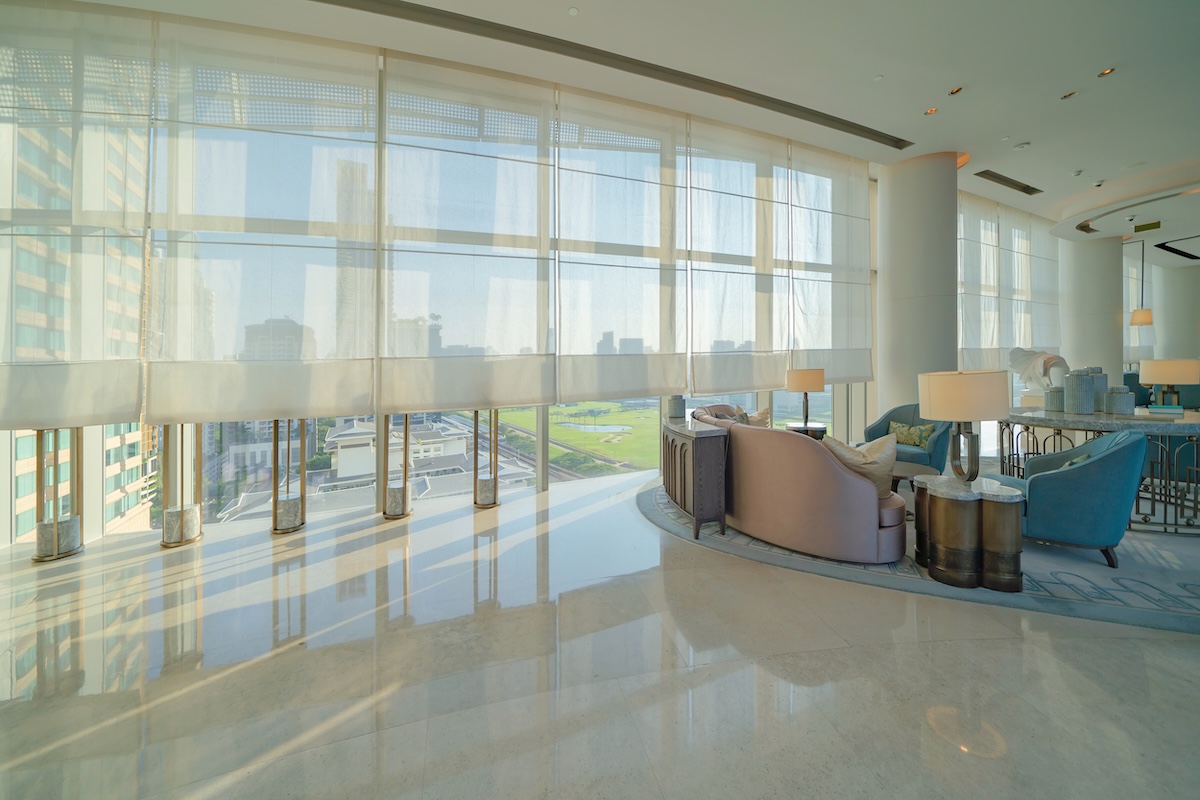
- Inside of modern hotel lobby, entrance and reception, waiting area with urban city view of outdoor, indoor.
-

- Young multiethnic startup team working at the modern office

-
- Window with modern roll blinds in room, closeup
Frequently asked questions
The edges. An ordinary blind hangs free, so wind gets behind it and rain comes past the sides. A zip screen has a bead welded along both vertical edges that runs inside a side channel, so the fabric is held under tension on three sides.
With a waterproof fabric and properly detailed channels it keeps the space usable in heavy rain. It is a screen, not a sealed wall, so in extreme driven rain some spray can still reach the floor near the bottom edge.
That depends on the fabric. Sunscreen mesh keeps a clear outward view and cuts glare. Translucent fabric passes light but not detail. Solid fabric blocks both. We bring samples to site.
Manual suits a single balcony screen used a few times a week. Motorised makes sense on wide openings, hard-to-reach screens, and restaurants or hotels where staff operate them daily.
Wide openings are normally divided into two or more screens. Where the division falls is shown on the drawing before fabrication.
Screens that sit inside the balcony line and roll away are generally easier to get agreed than a permanent enclosure. Rules differ between buildings, so take the committee’s approval in writing first.
Periodic cleaning of the fabric, keeping the channels free of grit, and a check of the mechanism. Service terms are stated in the quotation.
WhiteShed Solutions LLP executes projects across Maharashtra, Gujarat, Rajasthan, Uttar Pradesh, Kerala, Kolkata and Kathmandu. Tell us where the site is when you enquire.
Specifications at a glance
Fabric
Transparent PVC, sunscreen or mesh fabric, chosen for shade, privacy and view
Channels and headbox
Aluminium, detailed for the wall, column or railing
Operation
Motorised or manual
Wide openings
Divided into two or more screens, shown on the drawing
Measurement
Site measurement before fabrication; installation by our own team
Send us your opening size
Share your drawings, site photographs and approximate area, and our team will check feasibility and send a project-specific estimate.
WhiteShed Solutions LLP executes projects across Maharashtra, Gujarat, Rajasthan, Uttar Pradesh, Kerala, Kolkata and Kathmandu. See where we work.